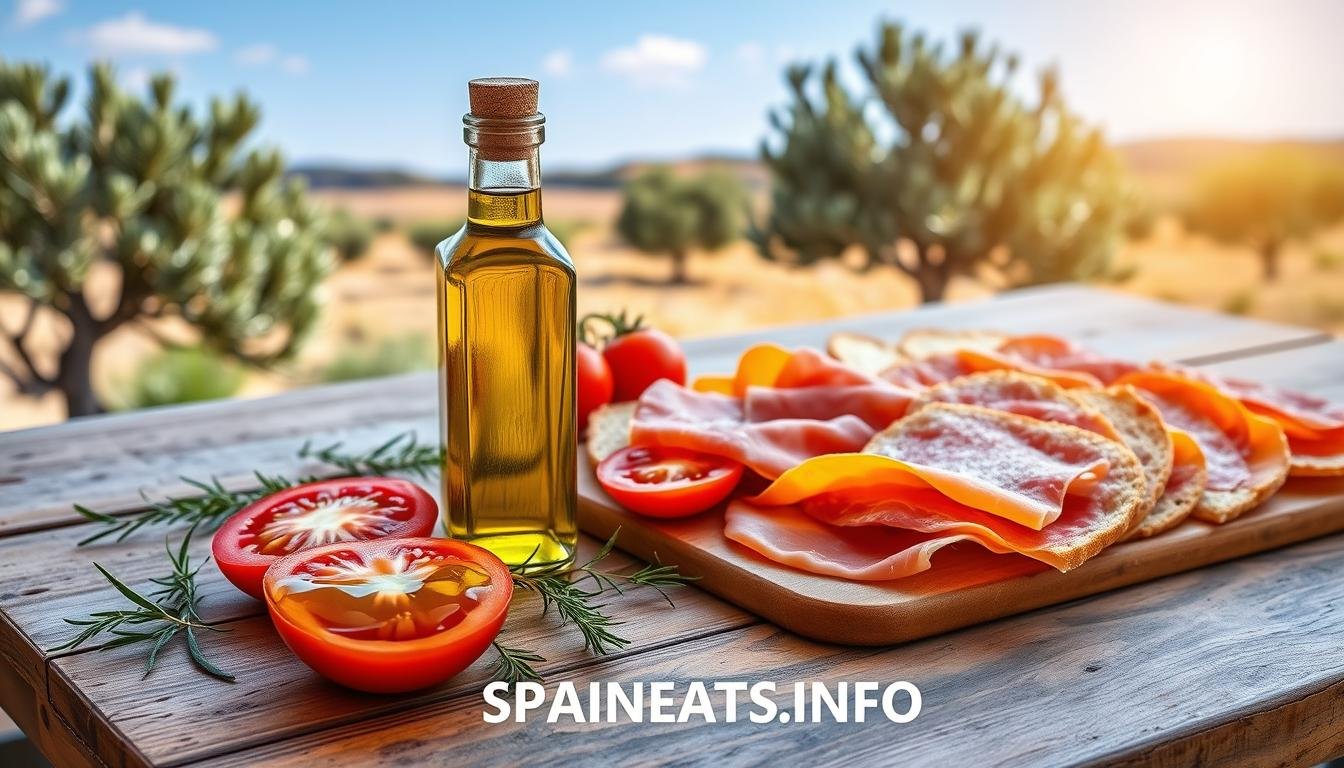
Jamón ibérico
Jamón ibérico is dry-cured ham from Iberian pigs, aged for months or years. It is one of Spain’s defining ingredients — eaten thinly sliced, often simply, with bread or as the center of a tapa.
What to know
Label language matters: acorn-fed (bellota) vs feed-based curing paths change fat quality and price. Jamón serrano is a related but different cured-ham tradition — do not treat the names as interchangeable.
Related entities
- Classic tapas dishes
- Andalusian cuisine / Extremadura / Salamanca production zones
- Spanish ingredients hub
- Spanish tapas guide
How Spain Eats uses Jamón ibérico
Cured Iberian ham with graded labeling — learn grades before you buy, without invented bottle rankings.
This ingredient page supports dish guides rather than replacing them. Open related recipes and regional pages to see the ingredient working in context. When Spain Eats links products, affiliate disclosure applies; we do not invent star ratings for bottles or packs we have not evaluated.
Shopping checklist: read origin and date cues when present, store away from heat and light when relevant, and match intensity to the dish — finishing versus long cooking are different jobs.
What to buy
Cured Iberian ham — grades and buying honesty.
For Jamón Ibérico, prioritize clear origin cues, sensible packaging, and a use-case (finishing vs long cooking) over hype labels.
Spain Eats may use affiliate links with disclosure; we do not invent star ratings for products we have not evaluated.
How it shows up in dishes
Open related traditional dishes to see Jamón Ibérico working in context rather than as an isolated superfood claim.
Store away from heat and light when relevant. Taste before you commit a whole bottle or tin to a delicate cold soup or finishing job.
Substitutions change identity — use the substitution tool when you must, and say so honestly in your own notes.
Pantry workflow
Ingredients hub → dish page → tool → Places. That order keeps shopping tied to cooking.
If labels confuse you (grades, smoked vs sweet paprika, rice types), trust specific Spain Eats guides over generic supermarket myths.
Questions: contact@spaineats.info.
Field notes for cooks and travelers
Keep a short tasting note the first time you cook or order this. Texture, salt, and fat tell you more than a copied ingredient list. Compare one neighboring regional plate the same week so differences stick.
If a method fights the regional pantry — wrong paprika character, weak stock, underripe tomatoes, rushed braise — fix the pantry decision before adding more steps. Spain Eats pages are written to prevent that kind of false complexity.
Next links: traditional dishes, regions, ingredients, tools, Places.
Practical depth for Jamón Ibérico
Spain Eats extends the Jamón Ibérico guide (ref 1885/jamon-iberico) with usable detail for cooks, travelers, and quality review. Round 1 adds checkpoints that generic spun articles skip.
Compare one neighboring dish the same week so differences stick in memory instead of blending into “Spanish food” fog.
Write a two-line note after cooking: what worked, what you will change. That notebook beats another skimmed listicle.
Pantry and timing: match intensity to the job. Finishing oils, paprika grades, stock strength, bean size, bread dryness, and desalting schedules are not interchangeable. If the method fights the pantry, fix the pantry before adding steps.
Discovery rules: use Places after you know what good should taste like; confirm hours and ratings on Google Maps. Spain Eats does not invent stars. Dietary tags including Halal are filters — confirm with the venue. Affiliate links are disclosed when used.
Continue via dishes, regions, ingredients, tools. Corrections: contact@spaineats.info.
Practical depth for Jamón Ibérico
Spain Eats extends the Jamón Ibérico guide (ref 1885/jamon-iberico) with usable detail for cooks, travelers, and quality review. Round 2 adds checkpoints that generic spun articles skip.
For travel days, order this where kitchens repeat it often; rarity without craft is not automatically better.
When labels or menus are vague, ask a concrete question about texture or origin rather than accepting the English nickname alone.
Pantry and timing: match intensity to the job. Finishing oils, paprika grades, stock strength, bean size, bread dryness, and desalting schedules are not interchangeable. If the method fights the pantry, fix the pantry before adding steps.
Discovery rules: use Places after you know what good should taste like; confirm hours and ratings on Google Maps. Spain Eats does not invent stars. Dietary tags including Halal are filters — confirm with the venue. Affiliate links are disclosed when used.
Continue via dishes, regions, ingredients, tools. Corrections: contact@spaineats.info.