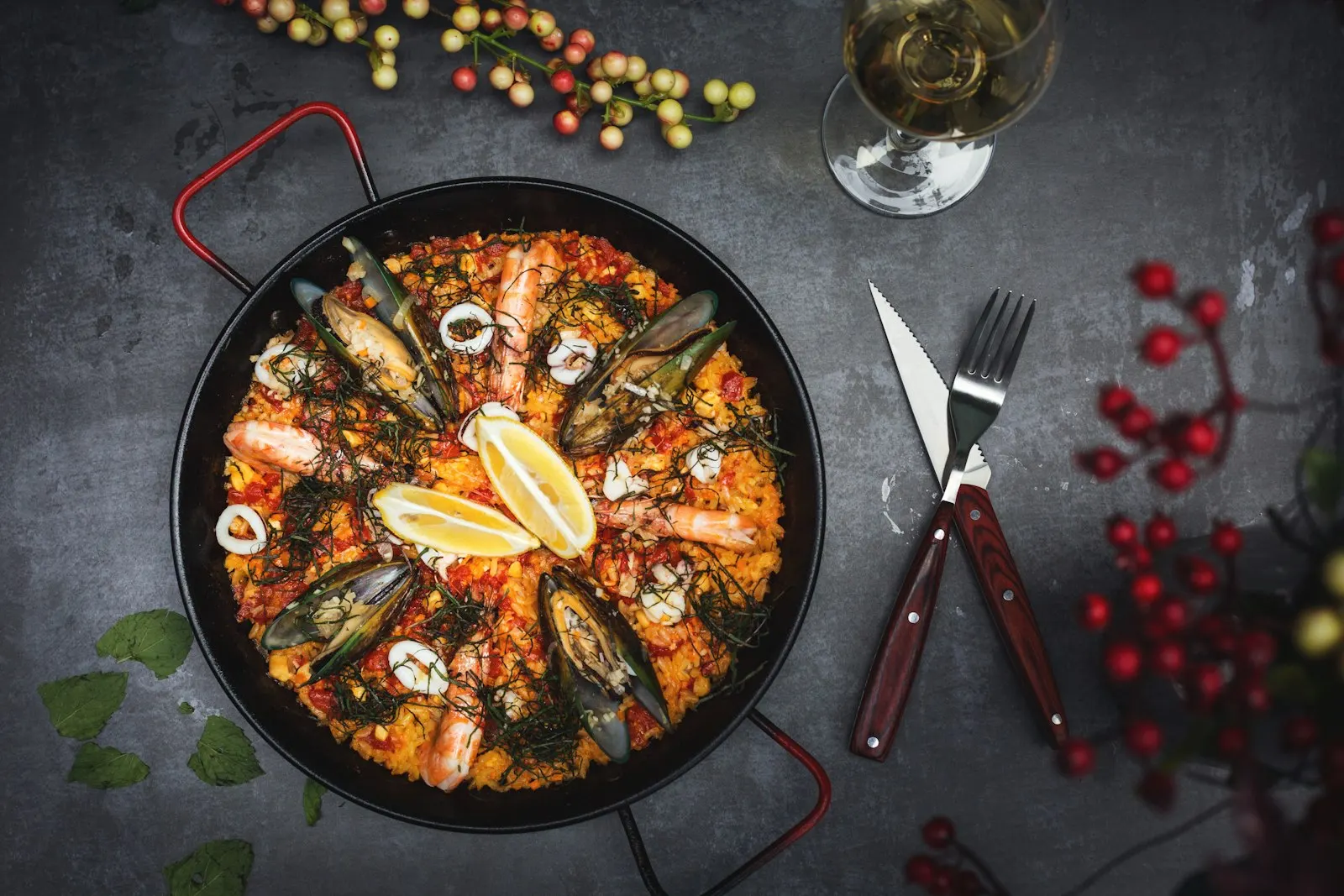
Paella · Valencia
Paella Valenciana
The inland Valencian dry-rice dish: chicken, rabbit, green beans, garrofó, tomato, olive oil, saffron, and short-grain rice in a wide pan. It is the reference plate for Spanish paella — not a seafood casserole and not a mixed “everything” rice.
If you only learn one rice plate in Spain, make it this one. Paella Valenciana is a named tradition from the fields and villages around Valencia, cooked in a shallow paella pan so the rice layer stays thin. The goal is separate grains plus, when the heat is right, a toasted bottom called socarrat.
Spain Eats treats it as a culinary reference, not a tourist nickname. Yellow rice with prawns, chorizo, and peas can be a pleasant party dish; it is not this plate. For coastal rice, use the seafood paella page. For the cluster map, start at the Spanish paella hub.
What “Valenciana” actually names
In Valencia, paella is not a cooking method you can pour any protein into. It points to a land recipe: farm animals, beans from the huerta, and rice that drinks a light broth without turning creamy. Coastal kitchens cook related dry rices — often called arroz de marisco — with fish stock and shellfish. Both families share the pan and the no-stir rule. They do not share the ingredient list.
That split matters when you read menus. “Paella mixta” (meat plus seafood in one pan) is a later hybrid aimed at visitors who want every signal of “Spanish rice” at once. It is common; it is not the Valencian reference. If a cook is honest, they will name the plate they actually made.
Core ingredients (and what they do)
- Rice — Spanish short-grain such as bomba. It absorbs liquid without collapsing into risotto. Long-grain pilaf rice will not behave the same way.
- Chicken and rabbit — browned in the pan first so the fond seasons the water. Traditional home versions use both; some family pots skip rabbit when it is hard to buy.
- Ferradura (flat green beans) and garrofó — the horticultural signature. Garrofó is a large creamy lima-type bean. Substituting garden peas changes the plate’s identity.
- Tomato and olive oil — the sofrito is brief: grated tomato cooked in oil until the raw edge goes. This is not a long Italian sauce.
- Saffron — color and aroma. Fake yellow coloring is the shortcut that makes tourist pans look “Spanish” without tasting of spice. See saffron.
- Water or a light stock — many home cooks use water after browning meat; the pan already holds flavor. Heavy chicken stock can muddy the rice.
- Rosemary — a sprig laid on top near the end is common. It is perfume, not a stew herb to boil for an hour.
Paprika appears in many home versions; it is not a license to add smoked-chorizo oil. If the pan smells like a mixed grill of pork sausage, you have left Valenciana.
Method outline (why the order exists)
- Heat olive oil in the wide pan. Brown the meats well. This is where most of the savory depth comes from.
- Push meat aside or lift it; cook grated tomato until it darkens slightly. Add the beans.
- Return meats, add water, season, and bloom saffron in a little warm liquid before it goes in.
- When the liquid tastes like a thin, seasoned broth, sprinkle rice in an even layer. Shake the pan once to level. Do not stir after this.
- Cook uncovered. Rice should sit in a shallow layer. If it is piled, the top steams and the bottom never toasts.
- Listen for a light crackle at the end if you want socarrat. Rest a few minutes off heat so steam finishes the grains.
Stirring is the most common failure. It releases starch and gives you a creamy rice closer to risotto than to arroz seco. A lid traps steam and fights the dry-rice goal. Details and other failure modes are on common paella mistakes.
How to judge a pan (kitchen or restaurant)
Look at the rice, not the garnish. Grains should be separate, hydrated, and not mushy. There should not be a soup of broth underneath — that would be a wet rice (meloso or caldoso), a different Valencian family. A good socarrat is toasted, not acrid. If the pan is crowded with prawns, lemon wedges, and red peppers as the main event, the cook is decorating for the camera.
In restaurants, a pan made for two people in a true paella pan is a better sign than a single-portion deep dish. Single deep dishes often steam. None of this is a star rating: it is a way to know what you ordered. Live prices and hours belong on the venue or on Amazon for tools, not as fake scores on this page.
Related plates and honest limits
Fideuà swaps noodles for rice and is usually seafood; it is a sibling, not a garnish on Valenciana. See fideuà and Valencia’s rice dishes. Valencian cuisine is the regional home.
This page is research-based culinary reference. Spain Eats does not claim a kitchen-tested house recipe or invented restaurant rankings. If you cook it, keep the pan wide, the rice thin, and the ingredient list short.
Spain Eats product picks for this guide
Real product photos + editorial mini-listings — no Amazon prices on-page. Live checkout stays on Amazon.es. Affiliate disclosure.