Spanish dishes
Spanish Paella
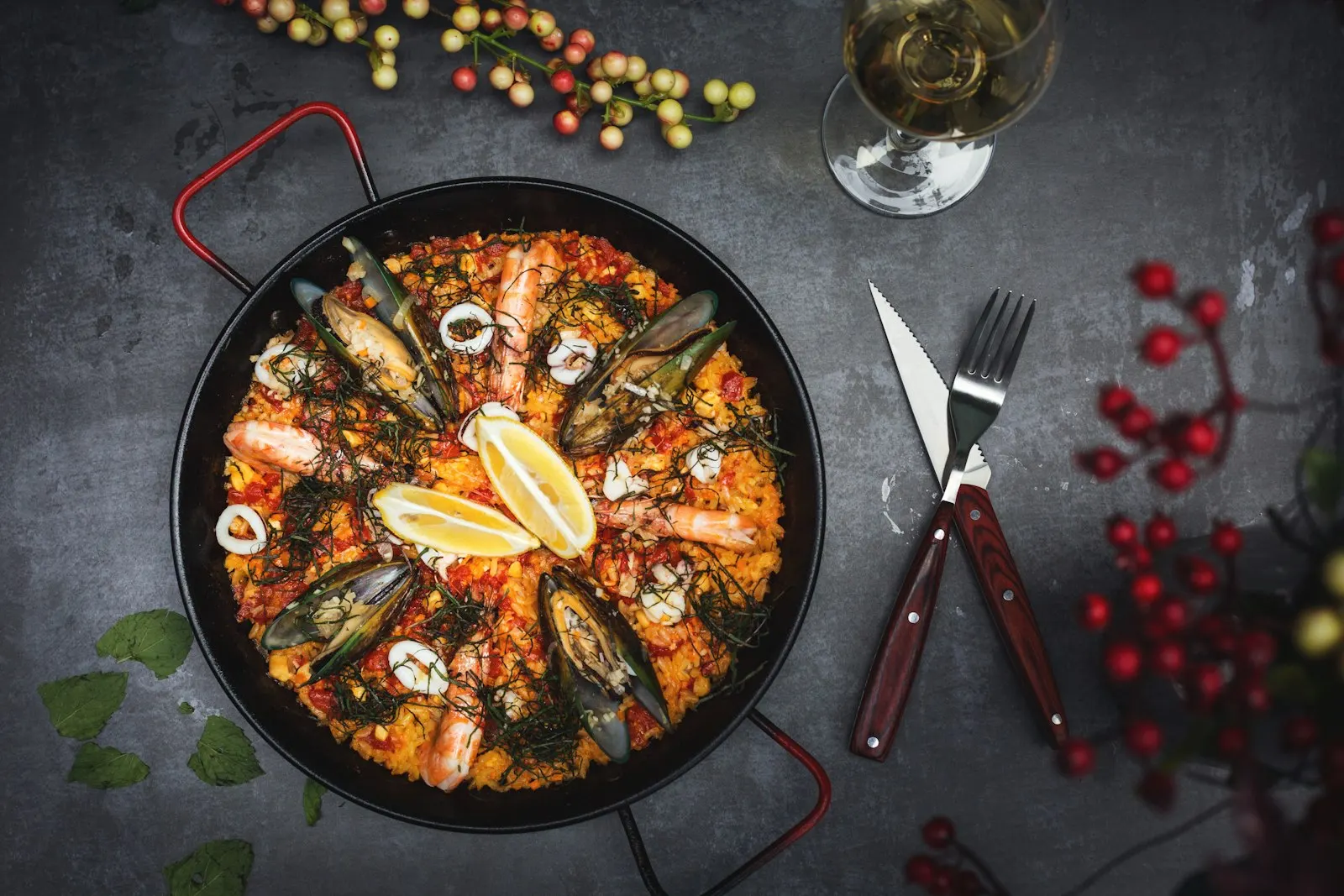
Paella is a Valencian dry-rice tradition cooked in a wide, shallow pan — not a single tourist recipe, but a system of related plates, ingredients, and technique built around separate grains and the toasted crust called socarrat.
Where paella comes from
The name and the method belong to the rice-growing plains around Valencia — the Albufera lagoon area and nearby huerta. Field workers and rural cooks built meals from what the land offered: short-grain rice, olive oil, tomato, saffron, and seasonal vegetables or small game. That inland plate is what Valencians mean by paella, not the mixed seafood-and-chorizo version common on tourist menus elsewhere.
Coastal communities developed their own dry-rice plates with fish and shellfish. Those are related cousins — same pan logic, different proteins — not upgrades or downgrades of one another. Understanding that split is the first step to reading the wider Valencian rice family without treating every yellow rice as the same dish.
Where in Spain
What makes it special
Three things define the system more than any single ingredient list. First, the paella pan: wide and shallow so liquid evaporates evenly and rice stays in a thin layer. Second, dry cooking — rice added to flavored liquid and left largely undisturbed once settled, rather than stirred like risotto. Third, socarrat, the lightly toasted crust at the bottom when heat and timing align.
Variations exist, but technique comes before toppings. Learn the reference Paella Valenciana, then compare coastal and noodle versions on their own terms — and steer clear of the shortcuts listed in common paella mistakes.
Ingredients that define the system
How it comes together
- Build the sofrito
- Add rice
- Add stock
- Cook uncovered
- Rest for socarrat
How the rice family compares
| Dish | Region | Main base | Character |
|---|---|---|---|
| Paella Valenciana | Valencia (inland) | Short-grain rice | Traditional reference — land proteins, beans, dry grains, socarrat |
| Seafood paella | Coastal Levante & beyond | Short-grain rice | Fish and shellfish in the same pan logic — related, not identical |
| Fideuà | Valencian coast (Gandía) | Short noodles | Same wide-pan method with pasta instead of rice |
| Arroz a banda | Alicante & Costa Blanca | Short-grain rice | Rice cooked in fish stock, often served apart from the fish (a banda) |
Explore the paella cluster
- Paella ValencianaThe traditional reference recipe and guide
- Seafood paellaCoastal dry rice — related, not the same plate
- SocarratThe toasted rice crust and how it forms
- Paella pan guideWhy width and depth matter
- Common mistakesWhat breaks texture and flavor
- FideuàNoodle cousin of the rice system
Coastal rice cousins
- Arroz a banda — fish-stock dry rice
Also see: Valencia’s rice dishes · Paella calculator · Places serving paella · Valencia city guide
FAQ
Is paella always a seafood dish? No. The traditional Valencian reference uses land proteins and vegetables. Seafood versions are coastal relatives that share the pan method but are not the same recipe.
What is socarrat? The lightly caramelized layer of rice at the bottom of the pan when heat, timing, and pan shape align. It is prized in dry-rice cooking but easy to miss if the rice layer is too thick or stirred too much.
Can I make paella in a regular deep pot? A deep pot steams rice unevenly and fights the thin-layer logic. A wide, shallow paella pan — or the closest wide skillet you have — works much better.
What rice should I use? Spanish short-grain varieties such as bomba absorb flavor while staying separate. Long-grain or risotto rice behaves differently and is not a direct swap.
Where should I start in this cluster? Read Paella Valenciana for the traditional baseline, then branch to seafood paella, fideuà, or technique pages like socarrat and common mistakes.
Paella family on Spain Eats
Spanish rice culture is not one recipe. Paella Valenciana is inland rabbit-and-snail country — not a seafood mix. Fideuà swaps noodles for rice. Arroz a banda and arroz negro answer different broth and ink goals. Read the hub first, then buy bomba rice and saffron with purpose.
FAQ
Do I need a paella pan? A wide shallow pan helps evaporation and socarrat — see our paella pan guide and calculator.
Is seafood paella authentic? Coastal versions exist, but they are not Paella Valenciana. Our seafood paella page explains the split.
What mistakes ruin the rice? Stirring after the initial layout, adding broth too fast, and using wrong rice — see common mistakes.
Where to eat it? Browse Valencia and Barcelona maps — verify hours locally.
Rice shopping checklist
Buy bomba rice for paella and arroz a banda — it absorbs broth without turning mushy. Saffron is optional in some home kitchens but expected in restaurant paellas. Pimentón de la Vera colors chorizo-forward versions. Use our paella calculator for pan diameter and servings.
Read Paella Valenciana, fideuà, and Valencian cuisine before you pick a restaurant from the Valencia map. Lunch paellas often require pre-order — call ahead on Sundays.
Bookmark this hub before buying rice or booking a Sunday table.
New to Spanish shopping? The pantry starter kit puts bomba after oil and pimentón — the order that actually gets used.
Apartment hob? Read paella pan for induction before ordering a classic carbon-steel paellera.
Rice shopping: bomba vs paella rice — what to buy.
Equipment: pans · induction · outdoor paellero.
Noodle nights: fideuà noodles buyer guide.
Spain Eats product picks for this guide
Real product photos + editorial mini-listings — no Amazon prices on-page. Live checkout stays on Amazon.es. Affiliate disclosure.