Tapas · Bar culture
Tapas etiquette
How to order and share small plates in Spain without treating every bar as a tourist-menu trap. Rules are local patterns, not national law.
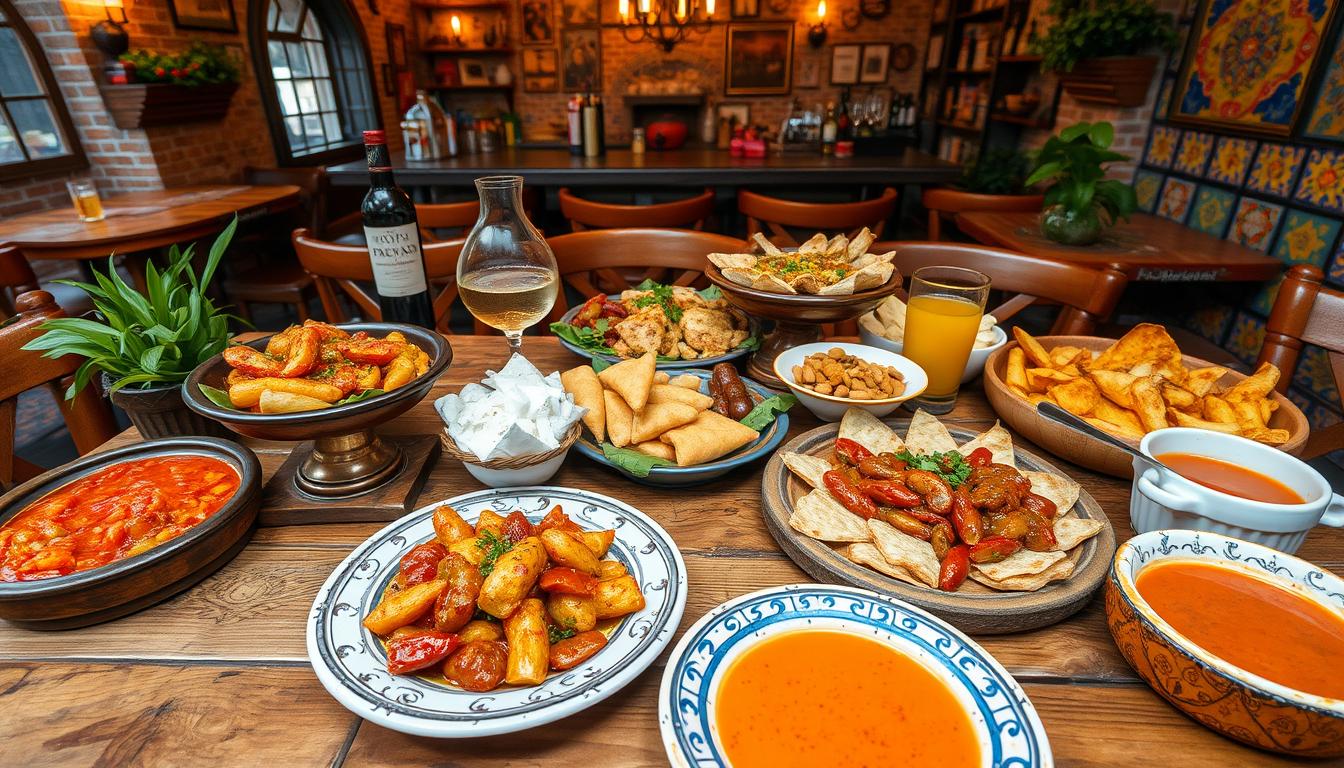
Tapas are a way of eating at the bar — a sequence of small plates tied to drinks — not a food group and not automatically free. Spain Eats keeps this page practical: what to expect at the counter, how sharing works, and where the tourist-menu script starts. For the wider cluster see the Spanish tapas guide.
Nothing here is a restaurant ranking. Hours, live scores, and whether a kitchen is still open belong on Google Maps or with the venue. We do not invent star ratings.
Free tapa is a local habit, not a nationwide right
In some cities — Granada is the famous example — a drink still often arrives with a small plate. In Madrid, Barcelona, Valencia, and most of the north, you usually pay for food. Assuming a free bite everywhere is how travelers get disappointed and how bars get treated as a loophole.
When a complimentary plate does appear, it is the house’s choice and often a simple fry, a few olives, or a small stew spoon. Do not send it back because you wanted something else, and do not stack six drinks to “collect a meal” as a game. If you want a specific dish, order it.
Where you stand, and who takes the order
Crowded traditional bars: order at the counter. You may eat standing, or take a small plate to a ledge. Sit-down taverns and many modern spots: a server comes to the table. Watch the room for thirty seconds. Copying the people already eating is faster than asking a tourist-menu host to explain “the system.”
Basque pintxo bars are a different grammar. Food often sits on the bar on bread; you take pieces and pay by toothpick count or by telling the cashier what you had. That is not the same as Andalusian tapas service. See tapas vs pintxos if you are moving between regions.
Sharing, pacing, and the tourist-menu trap
In a group, plates are shared unless someone says otherwise. Order a few things, eat, then order more. A table that dumps twelve dishes at once is eating a banquet, not tapas — the kitchen will treat it that way, and the food will not land hot.
The tourist-menu trap is a laminated sheet of “10 tapas + drink” with photos, English-only descriptions, and the same fried mix in every city. It is not illegal; it is just a different product. If you want the bar’s actual cooking, look at the chalkboard, the day’s raciones, or what locals are pointing at. Pointing works. So does naming a dish you already understand from Spain Eats — tortilla, croquetas, or a regional plate — instead of asking for “the typical one.”
Ración vs tapa: a tapa is a small serving; a ración is a shareable plate; a media ración sits in between. If four people order four tapas, you may still be hungry. If you want dinner, say ración.
Drinks, timing, and paying
Tapas sit next to beer, wine, or vermouth more often than next to water-only tables. Vermut hour is a real daytime window in many cities; dinner tapas often start later than northern-European supper. Closed kitchens at 17:00 are not a snub — see Spanish meal times.
Pay at the end at most sit-down spots; at packed bars you may settle when you leave the counter. Keep a mental tally. Tipping is not a US-style percentage ritual; rounding up or leaving small change is common, not mandatory theatre.
Common mistakes
- Expecting a free tapa in cities that sold that habit years ago.
- Occupying a busy bar table for two hours on one drink and no food.
- Ordering every photo on a multilingual sheet and calling it “authentic tapas.”
- Treating pintxos like tapas (or the reverse) and arguing with the cashier about toothpicks.
- Asking the bar to invent a star rating or “best in Spain” list. Use Places as a discovery layer, then confirm hours on Maps.
FAQ
Do I need to speak Spanish? Dish names and pointing work. Learning a few plate words from the tapas guide is more useful than a scripted “typical menu.”
Is it rude to share? Sharing is the default in a group. If you have an allergy or a dietary need, say so when you order — that is the moment, not after the plate is on the bar.
Where should I go after this page? Read the tapas hub, then a dish page, then Places if you want a city starting point. Listings stay editorial.
Tapas guide · Vermut · Food culture · Places