Spanish paella · Equipment guide
Paella pan buying guide
A paellera is wide and shallow so rice cooks in a thin layer. Choose material and diameter for your burner and guest count — not from a generic “best pans” listicle.
- Expert researched
- Beginner friendly
- No sponsored rankings
- Tied to our calculators
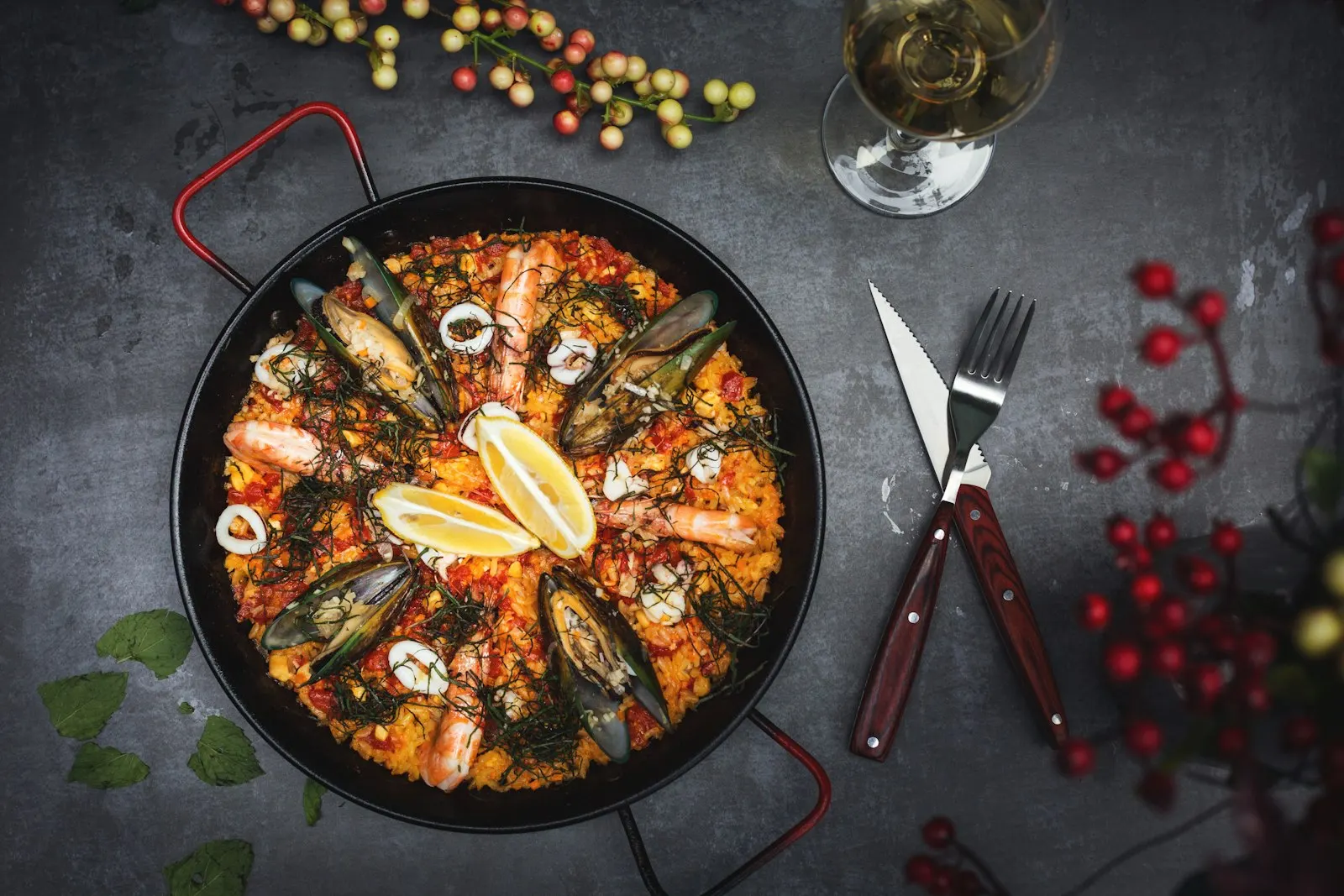
Material comparison
Heats fast, builds socarrat well, needs seasoning and careful drying. The traditional choice for outdoor or gas burners.
Less rust anxiety, easier cleanup, slightly different heat feel. Good for indoor cooks who want lower maintenance.
Required if your hob is induction. Check the base explicitly — a thin pan that will not couple to the coil is useless.
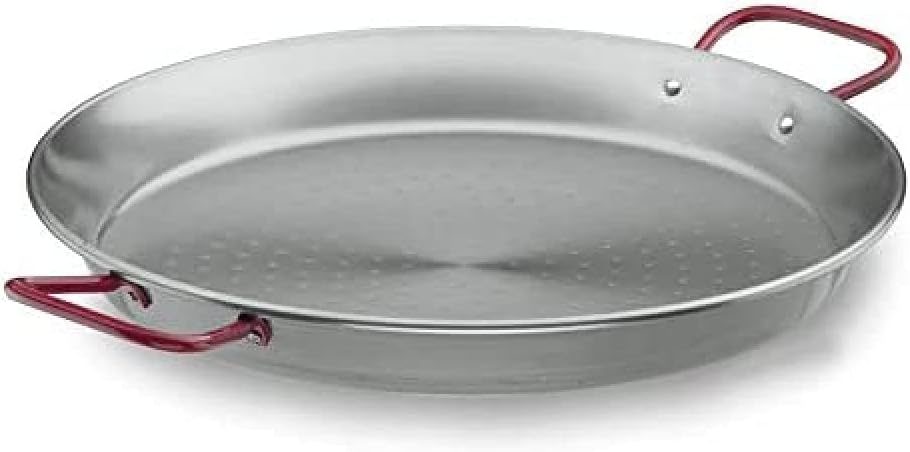
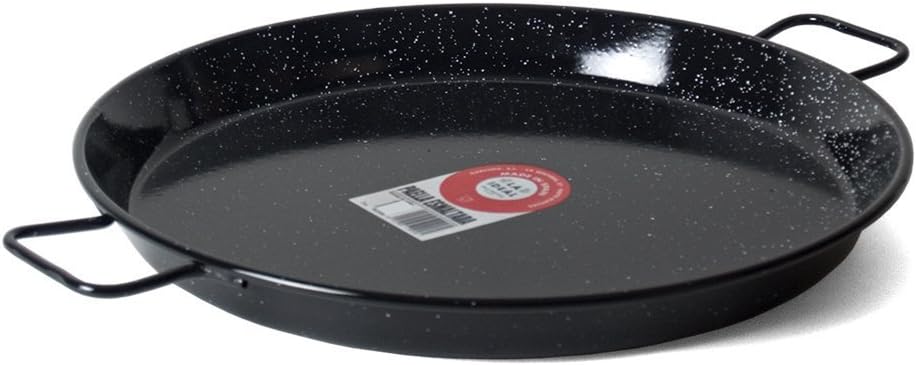
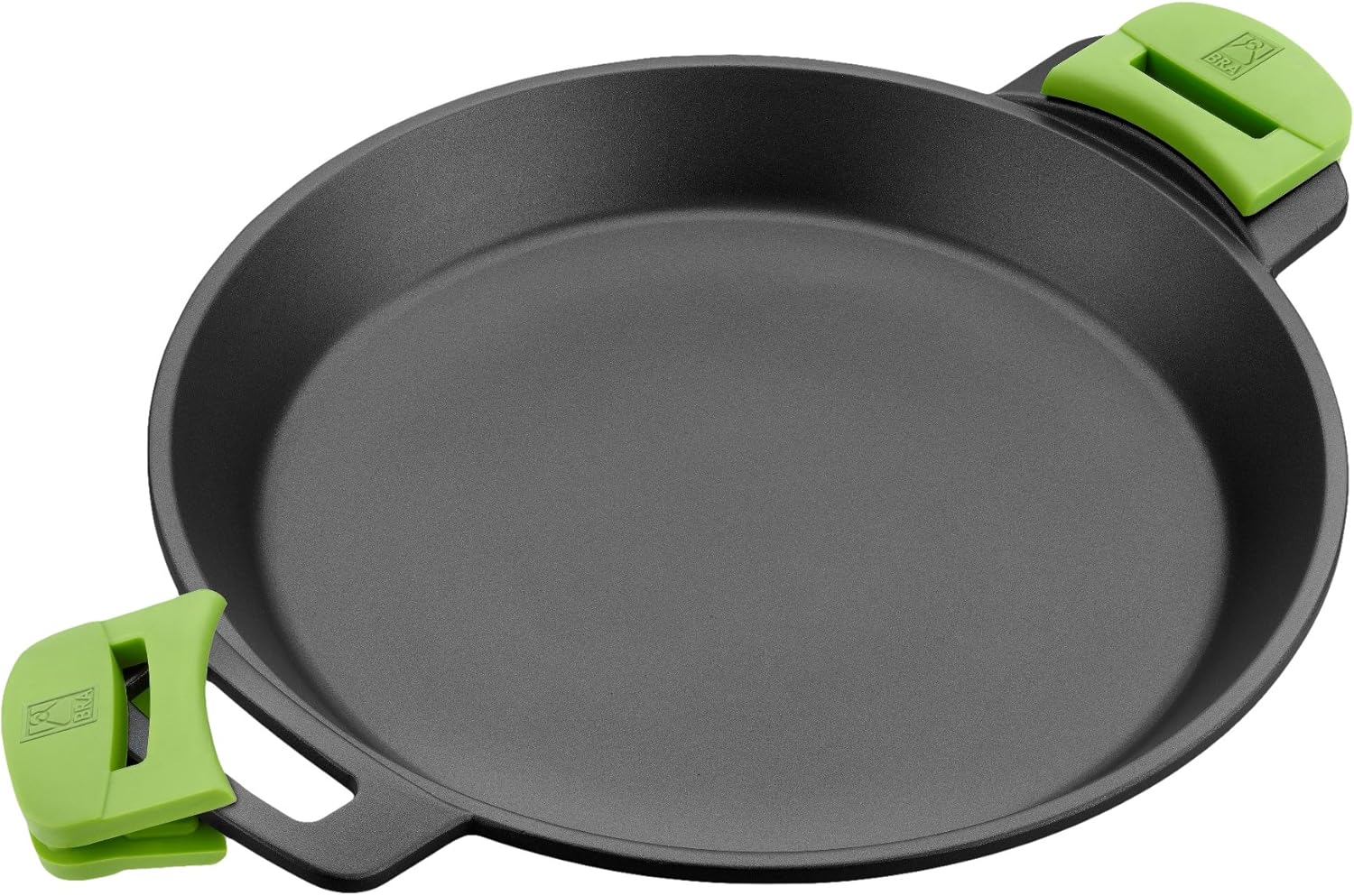
Size by servings (then verify with tools)
- ~30–34 cm — roughly 2–3 servings (thin layer)
- ~38–42 cm — roughly 4–6 servings
- ~46–50 cm+ — larger gatherings; needs a wide burner or outdoor ring
These are planning ranges, not laws — rice depth matters more than guest folklore. Use the paella calculator for rice/water ratios, then the recipe scaler if you adapt a written recipe.
When we link specific pans or retailers, links may be affiliate. We do not invent product scores — see the affiliate disclosure.
Burner fit (the real constraint)
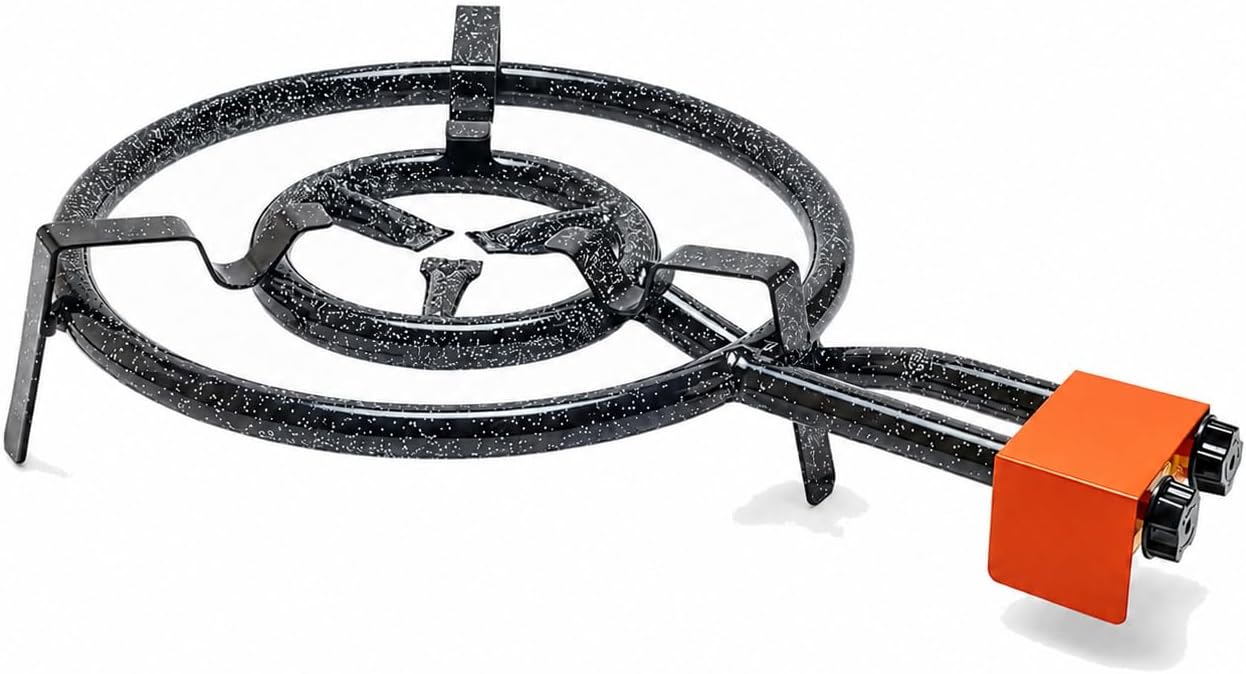
A pan wider than your heat source leaves a cold ring of rice. Match diameter to the burner or use an outdoor paella burner. For apartment kitchens, a mid-size enameled or induction pan often beats a huge carbon-steel pan you cannot heat evenly.
How to choose (use-case picks)
Most kitchens
Mid-size enamel or steel~38–42 cm if your burner can cover it. Easier than a festival-size pan.
See sizes →Outdoor / gas
Carbon steel classicBest socarrat potential when heat is even across the base.
Materials →Induction hob
Induction-safe baseConfirm the base first, then size. Link calculator after you lock diameter.
Open calculator →FAQ
Do I need a dedicated paella burner? Not for small pans on a strong gas or induction hob. For large diameters, outdoor rings exist because stove burners cannot heat the full base.
Nonstick — yes or no? Nonstick fights socarrat and usually cannot take the heat profile you want. Prefer carbon steel or enamel for authentic texture.
How do I pick a size without guessing? Decide servings first, run the calculator, then buy the smallest pan that keeps rice in a thin layer on your burner.
Best paella pan for induction (what actually matters)
Induction needs a ferrous base that couples to the coil. Classic thin carbon steel may work on some hobs if it is magnetic; many traditional paelleras are not reliable on induction. Look for labels that say induction-compatible, or multi-ply bases designed for the hob you own.
Test with a magnet on the base before you buy abroad. A pan that will not couple will never produce socarrat — the rice steams unevenly while the center stays cold.
- Induction-specific pans — flat, thick base; slower heat-up but even coupling
- Adapter plates — emergency only; heat response is sluggish for socarrat
- Outdoor gas ring — still the classic path for carbon steel if your kitchen is induction-only
Paella pan size for 4, 6, or 8 people
Size by rice layer depth, not guest folklore:
- 4 people — ~38–40 cm pan, ~300–350 g rice, single burner covering most of the base
- 6 people — ~42–46 cm pan, ~400–450 g rice, wide burner or outdoor ring
- 8 people — ~46–50 cm+ pan, 500 g+ rice, needs real heat coverage — not a small kitchen coil
Use the paella calculator for liquid ratios after you pick diameter. Too narrow a pan for the rice weight is how home cooks get mushy centers.
Carbon steel vs enameled paella pan
Fast heat, best socarrat potential, needs seasoning and drying. Ideal for gas and outdoor burners.
Easier cleanup, less rust anxiety, slightly different heat feel. Good indoor default when maintenance is a concern.
Neither is “better” in abstract — match material to your heat source and maintenance tolerance. Editorial product picks live on Spain Eats products; we do not invent Amazon review scores.
Paella pan decision tree
Pick the constraint first: burner type, guest count, then material. Carbon steel is the classic for gas/outdoor heat and socarrat control. Enameled is easier indoor care. Induction needs a compatible base — many “paella pans” look right and still will not couple to the hob.
- Measure the widest even-heat zone on your hob (or plan for a paellero).
- Choose diameter from servings (thin layer beats oversized empty steel).
- Only then pick carbon steel vs enamel vs induction-ready.
Use the calculator before you buy. Product picks below are matched to those jobs — not a ranked listicle of twenty pans.
Cooking on induction? Use the dedicated paella pan for induction hobs guide — magnet test and heat-zone sizing before you buy festival steel.
After the pan, buy grain with intent: bomba buyer guide.
Need wide even heat outdoors? Outdoor paellero: burner + pan setup.
Quick match: paella pan picker (people + induction / gas / outdoor).
Spain Eats product picks for this guide
Real product photos + editorial mini-listings — no Amazon prices on-page. Live checkout stays on Amazon.es. Affiliate disclosure.