Traditional dishes · Andalusia
Gazpacho
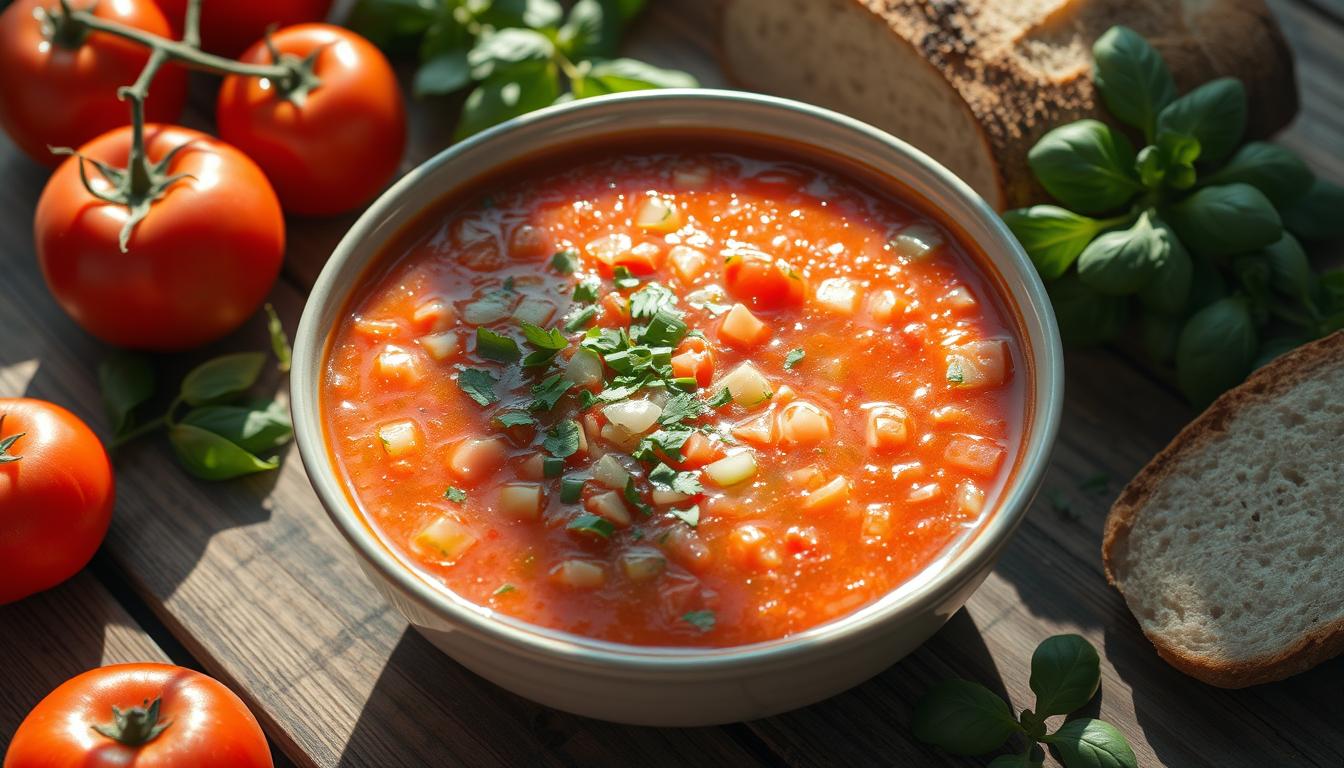
Cold Andalusian soup emulsified from ripe tomato, pepper, cucumber, garlic, bread, olive oil, and vinegar — summer heat management in a bowl, not a smoothie with a Spanish name.
What gazpacho actually is
Gazpacho sits in the Andalusian cold-soup family: raw produce, bread for body, olive oil for emulsion, vinegar for lift. The point is refreshment with structure — a spoonable soup that tastes of ripe tomato and pepper, not juice. In home kitchens it is weekday lunch and heat strategy. In restaurants it can be a refined starter; the identity stays the same.
Older bread-heavy versions predate the tomato-dominant red bowl most travelers meet today. Tomatoes arrived after 1492 and remade the plate; the method (blend, emulsify, chill) is older than the bright red color. When someone calls any cold tomato drink “gazpacho,” they are borrowing the name without the craft.
Gazpacho vs salmorejo vs ajoblanco
Gazpacho is relatively thin, vegetable-forward, and often includes cucumber and green pepper. Salmorejo (Córdoba) is thicker, bread-heavy, and usually topped with chopped egg and jamón — closer to a cold cream than a soup. Ajoblanco is pale almond-garlic soup, sometimes with grapes; it shares Andalusian cold-soup logic but not the tomato base.
If your bowl needs a knife and fork for toppings and coats the spoon like mayonnaise, you are closer to salmorejo. If it pours easily and tastes of cucumber and pepper as much as tomato, you are in gazpacho territory.
Core ingredients (and why each matters)
- Ripe tomatoes — underripe fruit makes flat, acidic soup. Flavor starts at the market, not the blender.
- Green pepper and cucumber — freshness and the “garden” note that separates gazpacho from tomato purée.
- Garlic — present but not aggressive; raw garlic intensifies as it sits.
- Day-old bread — optional in some modern versions, traditional for body and emulsion stability.
- Spanish extra-virgin olive oil — streamed in while blending to emulsify. See the olive oil buying guide.
- Sherry vinegar (or wine vinegar) — add gradually. Too much reads as harsh, not bright. Pair with sherry vinegar notes when you want Andalusian acidity.
- Salt; optional cumin — cumin appears in some household recipes; it should whisper, not dominate.
Method outline (home kitchen)
Rough-chop vegetables. If using bread, soak briefly so it softens without turning to paste.
Blend until smooth. Stream in olive oil so the soup emulsifies instead of separating into oil and juice.
Salt and vinegar to taste. Vinegar last and light — you can always add, you cannot remove.
Refrigerate until properly cold. Serving only cool misses the point of Andalusian summer cooking.
Texture preference splits households: some pass through a fine sieve for silk; others keep a little fiber. Either can be authentic. Water thins a thick blend; more bread or oil builds body. Adjust after chilling — cold mutes flavor, so season again before the table.
Common mistakes
- Underripe tomatoes → thin, sour, forgettable.
- Dumping vinegar in one pour → harsh edge that never softens.
- Skipping the oil emulsion → watery juice that separates in the fridge.
- Serving only cool, not cold — chill is part of the recipe.
- Confusing it with salmorejo toppings and calling the thick Córdoba cream “gazpacho.”
How it is eaten in Andalusia
At home, gazpacho is often a jug in the fridge for lunch through the hot months. Garnishes vary: diced cucumber, pepper, onion, croutons, or a drizzle of oil. Bars may serve it in a glass or bowl as a starter before fried fish or a longer tapas run. It belongs next to Andalusian cuisine and Andalusian tapas, not next to cream soups.
Travelers comparing Seville and Córdoba should taste both gazpacho and salmorejo on purpose — same pantry family, different craft. Use Places in Seville when you want the discovery layer after you understand the bowl.
Pantry links on Spain Eats
Gazpacho is a good stress-test for oil and vinegar quality because both stay raw. If your oil tastes flat or your vinegar is harsh, the soup announces it. For planning quantities and leftovers, the What Can I Cook? tool and recipe scaler sit next to dish pages in the same workflow: learn the dish, cook it, then find related places.
FAQ
How is gazpacho different from salmorejo? Gazpacho is thinner and more vegetable-forward. Salmorejo is thicker and bread-heavy, often topped with egg and jamón.
What about ajoblanco? Ajoblanco is pale almond-garlic cold soup — related Andalusian tradition, not a tomato gazpacho variant.
Which olive oil should I use? A flavourful Spanish extra-virgin for the emulsion. See the Spanish olive oil buying guide.
Can I freeze gazpacho? Texture and emulsion suffer. Prefer making a smaller batch and keeping it refrigerated for a few days.
Is bread required? Traditional versions often use it; some modern bowls skip or reduce it. Bread helps body and mouthfeel more than “authenticity theater.”
Related: Andalusian cuisine · Andalusian tapas · Olive oil · Seville places · Recipes hub
Seasonality and produce quality
Gazpacho is a summer dish because tomatoes and peppers taste like themselves in heat. Winter greenhouse tomatoes can make a technically correct emulsion that still tastes hollow. If you must make it off-season, choose the ripest fruit you can find and be honest that it will not match August Andalusia.
Salt draws moisture and brightens flavor after chilling. Always taste again when cold: refrigeration mutes acidity and aroma, which is why a perfect warm blender taste can seem flat from the fridge.
Emulsion science without the jargon
Olive oil does not just “add richness.” Streamed into a spinning blender, it creates a stable suspension so the soup looks opaque and coats the spoon. Dump oil on top after blending and you get a slick on tomato water. Bread helps hold the emulsion in traditional recipes; modern no-bread versions rely more on thorough blending and oil technique.
Vinegar is the brightness control. Sherry vinegar fits the Andalusian pantry; white wine vinegar works if it is clean. Add in teaspoons, wait, taste. Harshness from too much acid does not mellow the way cooked sauces do.
Serving styles you will actually see
Home jugs, restaurant bowls, and bar glasses all count. Garnishes are optional theater: diced cucumber, pepper, onion, egg, croutons, or ham crumbs. In Seville heat, a glass of gazpacho can be a pause between errands; in Córdoba, compare it deliberately with salmorejo on the same trip so the thickness difference sticks in memory.
For travelers using Spain Eats Places after cooking at home, search Seville or Córdoba and confirm live hours on Maps. We keep listings editorial and do not invent ratings.
Make-ahead and leftovers
Gazpacho keeps refrigerated for a couple of days. Separation is normal; shake or blend briefly before serving. Freezing damages texture. If leftovers taste dull, a pinch of salt and a few drops of vinegar usually revive them more than adding more raw garlic (which can become aggressive overnight).