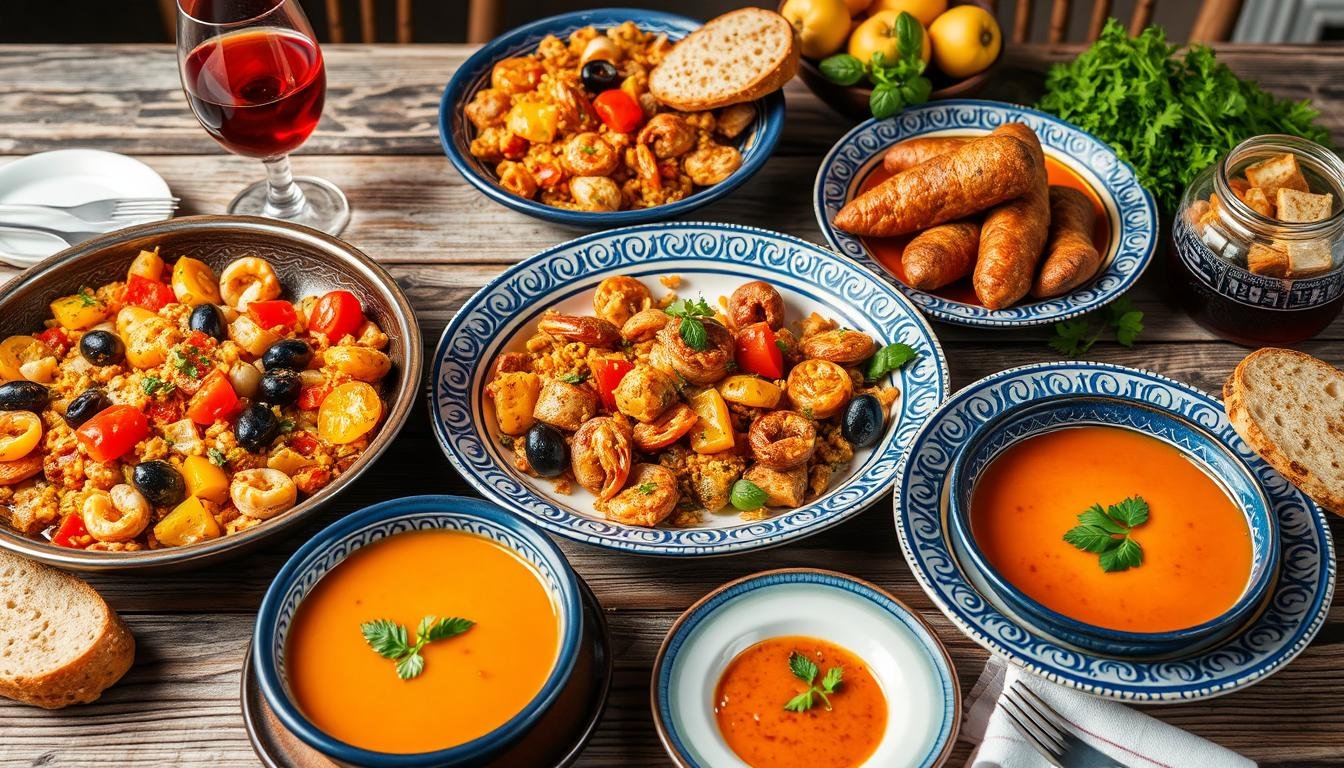
Traditional dishes · Castilla-La Mancha+
Pisto
Spanish summer vegetable stew of peppers, tomato, zucchini or eggplant, and onion cooked down in olive oil.
Cooked down, not flash-fried
Good pisto tastes sweet and concentrated. Vegetables release water, then cook until the mixture is spoonable and glossy with oil. Rushing leaves watery tomato and hard zucchini. Eggplant versions need enough oil and time so bitterness and raw texture leave.
Comparisons to French ratatouille or Italian caponata are fair as cousins — shared olive-oil vegetable logic — but pisto is eaten in Spanish contexts: beside eggs, with bread, as a tapa, or under a fried egg.
Vegetable order and oil
Start with onion and peppers so they sweeten. Add zucchini or eggplant next; eggplant needs enough oil and time. Tomato last so it can reduce into the mix. Stir enough to prevent sticking, not so much that everything turns to baby food.
Pisto is a good test of everyday olive oil: the oil remains visible and tasting. A harsh refined oil makes the stew smell like fryer leftover.
Egg on top and make-ahead
A fried egg on pisto is classic bar and home service. It can also sit beside grilled meats or cool as a side. Make ahead; reheating concentrates flavor further.
Method outline
Sofrito onion and peppers in olive oil. Add zucchini or eggplant, then tomato. Season. Cook until thick and sweet, not soupy.
Common mistakes
High heat only scorches oil and leaves raw centers. Skipping the reduce leaves a watery side. Underseasoning concentrated veg still needs salt.
FAQ
Is egg required? No. Egg is a classic serving, not the definition of the stew.
Zucchini or eggplant? Both appear; texture and oil absorption change with eggplant.
Related: Escalivada · Olive oil
Neighbors on the vegetable map
Escalivada is Catalan fire-roasted vegetables with a different texture goal. Ratatouille comparisons are fine for intuition, but cook and serve pisto in Spanish contexts so the dish keeps its name honestly.
Seasoning checkpoints
Salt early enough that vegetables season as they cook, then taste again after reduction. Black pepper is optional. Vinegar is not required; if you add it, keep it light so the stew does not turn into escabeche.
Practical checklist before you cook
Read the quick answer once, then shop with the fact card in mind. Set time expectations honestly — bar tapas can be fast; stews are not. Keep olive oil, salt, and a tasting spoon at hand so you season while food is still adjustable.
If you are learning Spanish food through Spain Eats, open the related region page in another tab. Geography prevents false “national recipe” assumptions. When you finish, use Places only after you know what good should taste like.
Write one note about what you would change next time. That notebook becomes useful depth — better than copying a new generic article each week.
Notes specific to pisto
Keep this plate distinct from lookalike dishes with similar English names. Pisto on Spain Eats means the Spanish reference described above — ingredients, texture goals, and serving context included. If a restaurant or recipe diverges, ask whether the divergence is regional tradition or just a rename.
Share feedback via contact@spaineats.info if you find a regional detail we should add. Editorial updates beat silent thin pages.
Related reading paths: traditional dishes hub, the matching regional cuisine guide, pantry ingredient pages, then Places for location. That order protects both cooking quality and travel decisions.
Field notes for cooks and travelers
Keep a short tasting note the first time you cook or order this. Texture, salt, and fat tell you more than a copied ingredient list. Compare one neighboring regional plate the same week so differences stick.
If a method fights the regional pantry — wrong paprika character, weak stock, underripe tomatoes, rushed braise — fix the pantry decision before adding more steps. Spain Eats pages are written to prevent that kind of false complexity.
Next links: traditional dishes, regions, ingredients, tools, Places.