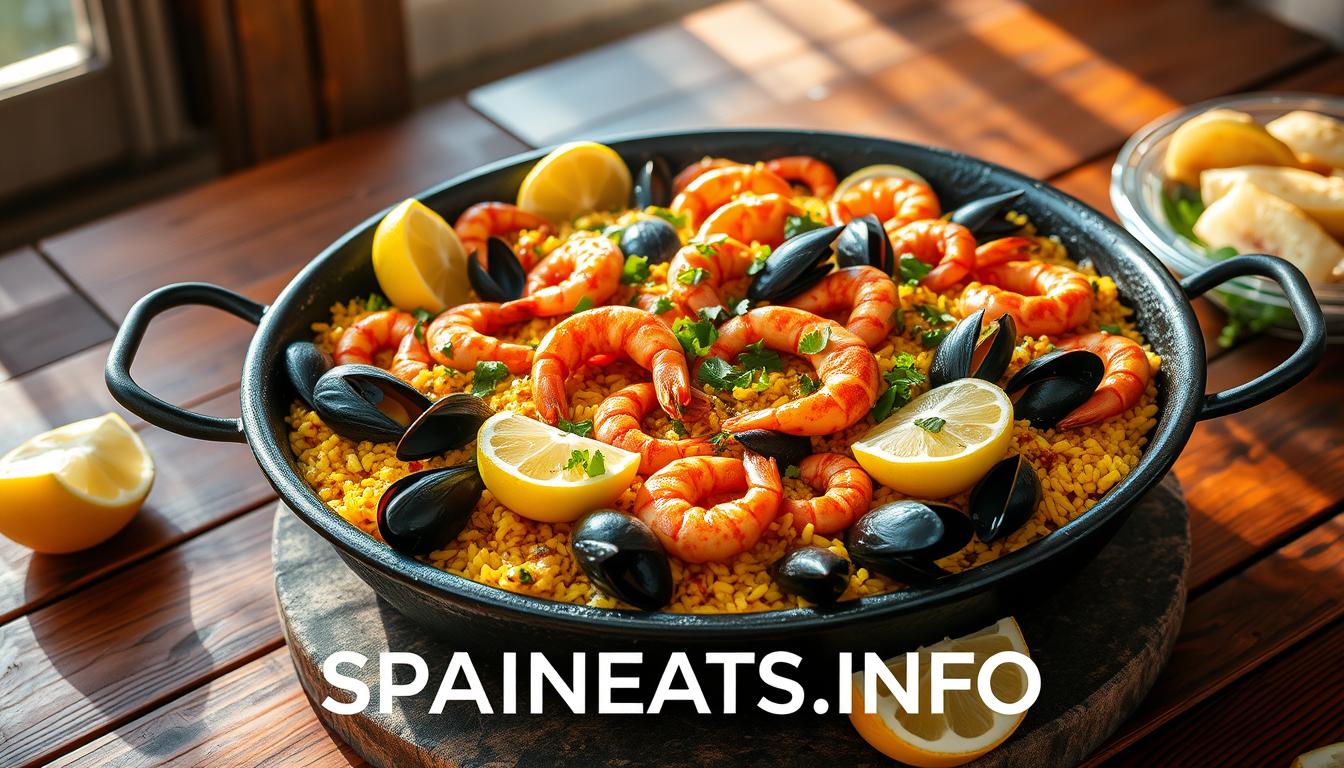
Paella · Coastal rice
Arroz a banda
A dry Alicante–Valencian coastal rice built on fish stock — often with monkfish, squid, or shellfish — where the rice flavor comes from the sea, not from a mixed tourist paella. Related to seafood paella, but with its own naming and stock discipline.
How arroz a banda differs from seafood paella
Both live on the Mediterranean coast and both use a paellera. The difference is naming and composition emphasis:
- Seafood paella — shellfish and fish often cook in the same pan as the rice; English menus blur many coastal dry rices under “paella”
- Arroz a banda — stock from fish/sofrito is the star; seafood may be arranged “aparte” depending on kitchen style
- Paella Valenciana — inland land recipe; not a seafood plate — see Paella Valenciana
If you are learning technique, pick one reference plate per pan. Hybrid “paella with everything” teaches neither stock nor tradition.
Stock is the recipe
Home cooks fail arroz a banda when they use generic cube stock. Build liquid from:
- Fish bones and heads (monkfish, rockfish, or market trim)
- Quick sofrito — tomato, garlic, optional ñora or paprika
- Water simmered 20–40 minutes, strained
Season the stock before rice goes in. Rice only amplifies what the liquid already tastes like.
Rice and pan (same system as paella)
Use bomba or another Spanish short-grain. Keep the layer thin in a wide pan. Do not stir after adding rice. Finish for optional socarrat. Scale servings with the paella calculator.
Where to taste it
Common along Alicante and Valencia coasts — often listed beside other arroces secos. Spain Eats maps places editorially; confirm menus live. See Places in Valencia and Valencian cuisine.
Paella hub · Seafood paella · Saffron · Valencia rice dishes
Spain Eats product picks for this guide
Editorial mini-listings — no Amazon prices on-page. Live checkout stays on Amazon.es. Affiliate disclosure.