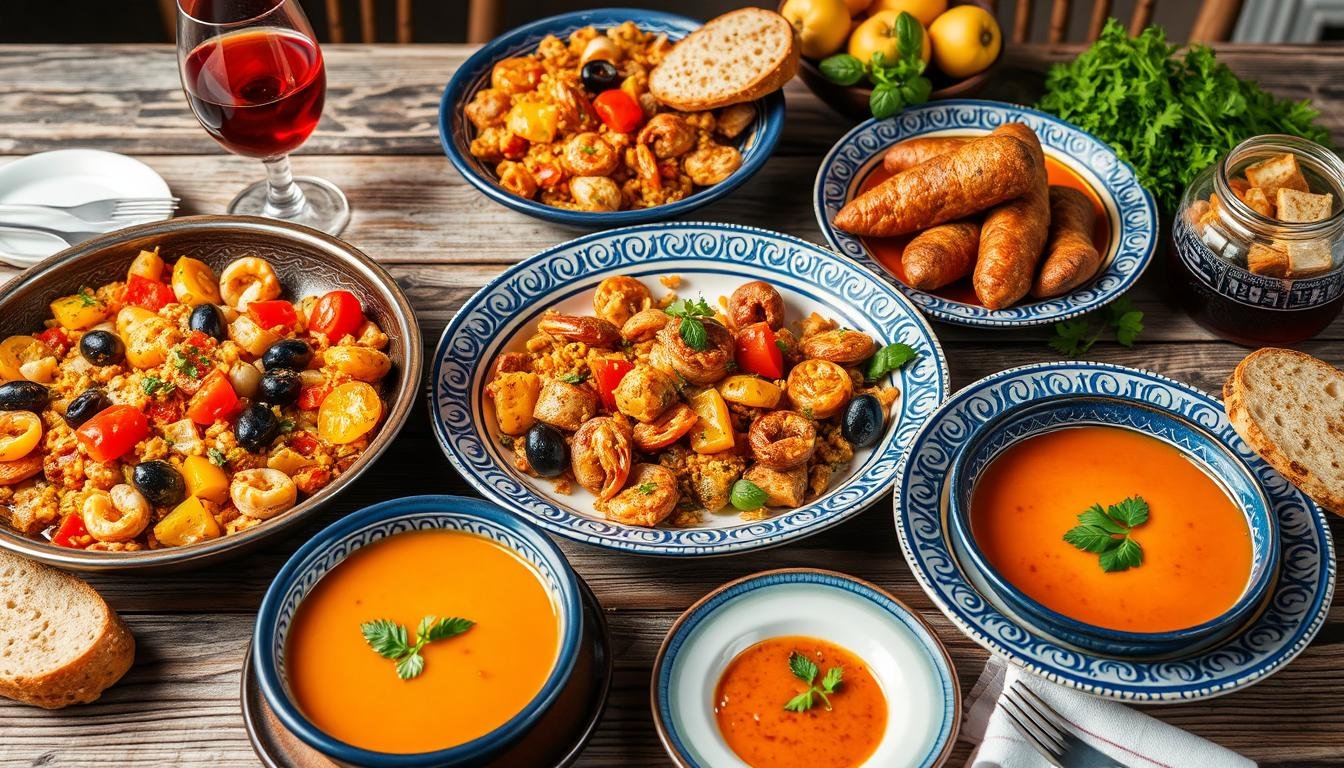
Traditional dishes · Madrid
Callos a la madrileña
Madrid tripe stew with chickpeas, chorizo, and morcilla — paprika-red, long-cooked, offal-forward.
What defines the Madrid plate
Tripe must be cleaned and cooked until soft without turning to mush. Chickpeas add body. Chorizo and morcilla season the pot with fat and spice. Pimentón colors and flavors the sauce. The result is hearty, aromatic, and polarizing for travelers who avoid offal — which is fine; the dish does not pretend to be something else.
It sits in the same Madrid comfort map as cocido madrileño: long cooks, legumes, pork products, tavern tables.
Offal honesty
Callos is tripe. If that is not for you, choose another Madrid classic such as cocido. If it is for you, insist on tenderness and a paprika-forward sauce that tastes simmered, not powdered.
Method outline
Clean and par-cook tripe as needed; soak chickpeas if dried. Build sofrito, paprika, meats, tripe, chickpeas, and liquid. Long gentle simmer until tripe is tender and sauce thick.
Tavern context
Cold-weather and lunch energy more than beach tapas. Pair with Madrid Places for discovery; always verify hours and reviews on Maps.
Common mistakes
Undercooked tripe is rubber. Burning paprika in dry oil makes bitter sauce. Skipping skim and season passes leaves a muddy pot.
FAQ
Is morcilla required? Classic in Madrid versions; some home pots vary. Chorizo is hard to skip without changing the plate.
Where to try it? Madrid taverns are the reference. Use Places in Madrid; confirm on Maps.
Related: Cocido madrileño · Madrid places
Chickpeas and paprika discipline
Chickpeas should be cooked through and not chalky. Paprika should bloom without burning. The sauce should look intentional — red, thick, aromatic — not gray and watery.
How spicy should it be?
Paprika warmth is part of the identity; chili heat is not mandatory. Adjust with the paprika type and chorizo choice. The stew should smell round and meaty, not like a pepper challenge.
Practical checklist before you cook
Read the quick answer once, then shop with the fact card in mind. Set time expectations honestly — bar tapas can be fast; stews are not. Keep olive oil, salt, and a tasting spoon at hand so you season while food is still adjustable.
If you are learning Spanish food through Spain Eats, open the related region page in another tab. Geography prevents false “national recipe” assumptions. When you finish, use Places only after you know what good should taste like.
Write one note about what you would change next time. That notebook becomes useful depth — better than copying a new generic article each week.
Field notes for cooks and travelers
Keep a short tasting note the first time you cook or order this. Texture, salt, and fat tell you more than a copied ingredient list. Compare one neighboring regional plate the same week so differences stick.
If a method fights the regional pantry — wrong paprika character, weak stock, underripe tomatoes, rushed braise — fix the pantry decision before adding more steps. Spain Eats pages are written to prevent that kind of false complexity.
Next links: traditional dishes, regions, ingredients, tools, Places.