Spanish ingredients · Buyer review
Bomba vs “paella rice”: what to buy
Buy Spanish short-grain labeled for paella — bomba when you want absorption margin in a wide pan. Do not swap arborio 1:1. Skip seasoning sachets until rice, pan, and broth basics work.
What the rice must do
In a paella pan, rice sits in a thin layer, drinks flavored liquid, and finishes mostly undisturbed. The grain needs absorption margin without collapsing into risotto. That job — not a Spanish flag on the package — is what you are buying.
Bomba vs supermarket “paella rice”
High absorption margin; forgiving when broth and heat are imperfect. Best default when you cook dry rice occasionally and want fewer mush disasters.
Can work if the bag is honest about short-grain paella use. Judge by cooking behavior, not marketing photos of seafood towers.
Wrong starch behavior for classic dry paella. Use it for risotto, not as a silent swap.
Technique context: Paella Valenciana and the paella hub. This page is the shopping decision before checkout.
How to read the bag
- Short-grain / paella / bomba language beats “premium rice” alone.
- Origin cues (Valencia / Calasparra-style stories) help; a blank white bag with a paella photo does not.
- Buy a kitchen size you will finish in months — stale short-grain tastes dusty.
- Ignore “paella kit” rice+seasoning bundles until plain rice works.
Portion math before you buy a bigger bag
Plan roughly 80–100 g dry rice per person in a wide pan, then confirm with the calculator for your diameter. A huge sack is not a bargain if humidity and time dull the grain. Match pan size to servings — induction cooks should also read paella pan for induction.
What to skip first
- Chorizo-seafood “everything” seasoning sachets as your first buy.
- Long-grain rice dyed yellow.
- Buying saffron threads before you can manage rice depth — color will not save a thick layer.
Pantry order: oil and method first, then bomba, then saffron when you cook rice often. See the pantry starter kit.
Kitchen tests that tell you the bag is right
- Cook a small dry rice in a wide pan with measured broth — grains should stay separate.
- If it goes creamy when undisturbed, you bought the wrong starch family.
- If the center is still hard while the rim burns, fix heat zone / pan size before blaming bomba.
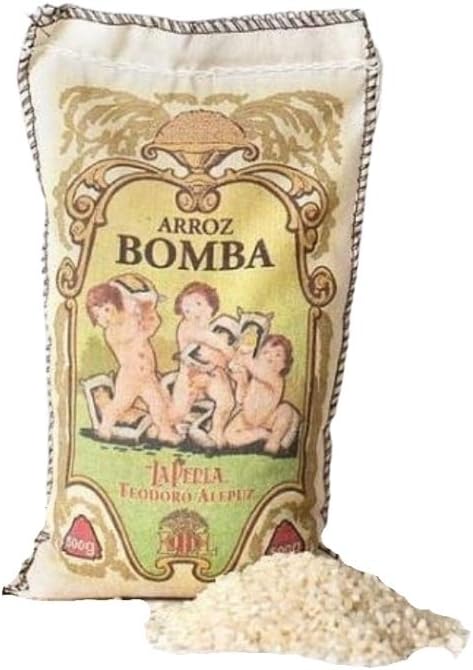
Product pick below is a kitchen-bag bomba default for that test path. Live price on Amazon.es.
FAQ
Is bomba required? It is the safest home default for dry paella logic — not the only Spanish short-grain that can work.
Can I rinse bomba like jasmine? Usually no for paella — you want surface starch behavior suited to the method; follow your recipe’s tradition, not sushi rules.
Where next? saffron, common mistakes.
When seasoning kits make sense
After plain bomba works in your pan, a saffron-tint sachet can be a travel or weeknight shortcut — never the first purchase. If the kit is how you “learn paella,” you learn a packet, not rice. Buy rice + pan logic first; add convenience later.
Storage: keep bags sealed. Humidity turns short-grain tired faster than people admit. Buy the bag size matched to how often you cook rice, not warehouse optimism.
Pan geometry before brand loyalty
Bomba cannot rescue a deep skillet pretending to be a paella pan. If the rice layer is thick, the center steams while the rim scorches. Fix diameter and depth first — then judge the bag. Carbon steel and induction paths are covered in the paella pan guide and induction buyer guide.
Rule of thumb: you should see a thin, even grain bed, not a casserole mound. If your “paella” always needs stirring to finish, you are cooking a different starch job — buy rice for that job, or change the pan.
Broth discipline that makes bomba look good
Measure liquid. Guessing “until it looks right” is how people declare bomba overrated. Use the paella calculator once, write your house ratio for your pan size, and stop reinventing it every Sunday.
- Too little liquid: hard centers; cooks panic and flood mid-cook.
- Too much liquid: porridge; then they blame bomba for “not being fluffy.”
- Uneven heat: rim dry, center wet — move the pan, do not stir like risotto.
Fish stock, chicken stock, or a clean vegetable stock all work; muddy supermarket cubes fight saffron and sofrito. Clarity beats “seafood flavor powder.”
Buy-once checklist at checkout
- Short-grain / paella / bomba language on the bag — not long-grain “Spanish style.”
- Bag size you will finish in weeks, not years.
- No requirement for a seasoning sachet to make rice edible.
- Price that matches pantry rice, not gift-tower theater.
If two bomba bags are similar, pick the fresher turnover listing and move on. Obsessing over micro-brand lore before you can cook a dry layer is how shopping replaces cooking.
Travel note vs home bag
In Valencia and the rice belt, bomba and related short-grains are normal supermarket grammar. At home abroad, the Amazon bag is a substitute for that aisle — treat it as a working ingredient, not a souvenir. Once your technique is stable, you can experiment with other Spanish short-grains; until then, one honest bomba bag plus pan discipline beats a rotating cast of novelty rice.
Spain Eats product picks for this guide
Real product photos + editorial mini-listings — no Amazon prices on-page. Live checkout stays on Amazon.es. Affiliate disclosure.